




















Fiber Optic Tech
The Core Role and Value of Optical Switches in Metaverse Data Centers
As the metaverse gradually transitions from concept to large-scale application, immersive interactions, real-time rendering, and massive concurrent connections are reshaping the technical boundaries of data center networks. As the next-generation form of the internet, the metaverse imposes unprecedented requirements on networks—ultra-high bandwidth, ultra-low latency, elastic scheduling, and long-term stable operation. Against this backdrop, traditional data center architectures centered on electronic switching are facing bottlenecks, while optical switch technology is emerging as a key infrastructure supporting the evolution of metaverse data centers.
Optical switches achieve full-optical path switching at the physical layer, not only breaking through the limitations of electronic switching in terms of bandwidth, power consumption, and latency, but also providing a completely new technical path for building high-performance, low-energy, and reconfigurable metaverse networks. This article systematically analyzes the core role, technical advantages, challenges, and future development trends of optical switches in metaverse data centers, starting from application requirements.
I. Core Challenges of the Metaverse for Data Center Networks
Metaverse applications feature high concurrency, strong real-time requirements, and heavy computational demands. Their network requirements are mainly reflected in the following aspects:
Extremely low end-to-end latency: XR interactions, virtual social experiences, and real-time collaboration are highly sensitive to network latency, typically requiring end-to-end latency to be controlled within 7–15 ms.
Massive data throughput capacity: Ultra-high-definition content, 3D scenes, and real-time rendering drive network bandwidth to continuously evolve toward 400G / 800G / Tbps. Dynamic traffic patterns: Scenarios such as virtual concerts and digital twins generate bursty traffic, placing higher demands on network scheduling flexibility.
7×24-hour stable operation: Metaverse services are highly continuous, and any network interruption directly impacts user experience and business value.
These characteristics determine that metaverse data centers must break through the performance and energy consumption ceilings of traditional electronic switching architectures.
II. Optical Switches as a Key Enabler for Metaverse Data Centers
Significantly Reducing Network Latency
Optical switches realize data forwarding through all-optical path switching, eliminating the O/E/O (optical-electrical-optical) conversion process in traditional electronic switches and reducing processing latency at the physical layer. When optical switches are introduced at the core and aggregation layers, network switching latency can be reduced to the microsecond or even nanosecond level, providing a fundamental guarantee for the metaverse’s stringent low-latency requirements.
This low-latency characteristic is especially critical for real-time rendering, virtual interactions, and cloud collaboration, serving as the underlying foundation for ensuring immersive experiences.
Building Ultra-High-Bandwidth Optical Interconnect Capabilities
Optical switches based on photonic technology have a natural advantage in bandwidth scalability and can easily support high-speed interconnect needs of 100G, 400G, 800G, and even 1.6T. Compared with electronic switching equipment limited by chip processes and power consumption, optical switches are better suited to support the ultra-large-scale data transmission required for the long-term evolution of the metaverse.
Through coordinated deployment with high-speed optical modules and fiber interconnect solutions, optical switches are becoming the core nodes of next-generation high-bandwidth data center networks.
Enabling Rapid Network Topology Reconfiguration and Elastic Scheduling
Metaverse application scenarios are highly dynamic, with network traffic exhibiting distinct “tidal” patterns. Optical switches support millisecond-level optical path reconfiguration, allowing dynamic adjustment of network topology and bandwidth al based on business needs.
For example, in high-concurrency scenarios such as virtual concerts or online launches, optical switches can quickly establish direct optical paths for hotspot services, effectively avoiding network congestion and improving overall resource utilization.
Enhancing System Reliability and Long-Term Operational Stability
Compared with complex electronic switching systems, optical switches have simpler structures and slower device aging, offering high reliability and ultra-long service life, making them ideal for the long-term continuous operation requirements of metaverse data centers.
Taking GLSUN’s mechanical optical switches as an example, their products support wide-temperature operation environments and have mechanical lifespans reaching tens of billions of cycles, significantly reducing operation and maintenance costs and system failure risks, providing a stable and sustainable network foundation for metaverse services.
Effectively Reducing Overall Data Center Energy Consumption
In the context of energy consumption becoming a core challenge for data centers, the low-power advantage of optical switches is particularly prominent. Optical signals consume almost no energy during transmission, and optical switches require only minimal control power during switching, with per-bit energy consumption far lower than that of electronic switching equipment. As the scale of the metaverse continues to expand, optical switches will play an increasingly important role in the construction of green data centers.
Supporting Edge Computing and Distributed Deployment
The metaverse’s demand for real-time response is driving computing power to extend toward the edge. Optical switches can be deployed between edge data centers or computing nodes to achieve low-latency, high-bandwidth, and reconfigurable optical interconnects.
By connecting cloud and edge nodes via optical switches, some rendering and computing tasks can be off""ed to the edge, significantly improving the real-time performance and user experience of XR applications.
Providing Physical-Layer Network Security Assurance
Optical switches offer natural physical-layer isolation capabilities. By establishing independent optical paths, they enable business-level physical isolation, reducing the risk of data being eavesdropped, tampered with, or attacked.
In metaverse applications involving virtual assets, digital identities, and privacy data, this physical-layer security mechanism provides important protection for building a trustworthy network environment.
III. Challenges and Future Development Trends
Although optical switches have significant advantages in metaverse data centers, they still face challenges such as high-density integration, intelligent control systems, cost optimization, and large-scale deployment. In the future, with the development of 3D MEMS, integrated photonics, and intelligent control technologies, optical switches will further evolve toward larger port scales, faster switching speeds, and more intelligent scheduling capabilities. In the foreseeable future, optical switches will no longer be merely auxiliary equipment in data centers but will become indispensable core components in metaverse network architectures.
VI. GLSUN Optical Switch & OCS Solutions for Metaverse Data Centers
As the metaverse evolves from concept to large-scale deployment, immersive interaction, real-time rendering, and massive concurrent connections are redefining the performance boundaries of data center networks. Ultra-high bandwidth, ultra-low latency, elastic resource scheduling, and long-term operational stability have become fundamental requirements. In this context, GLSUN delivers a comprehensive optical switching and Optical Circuit Switching (OCS)–based solution purpose-built to support next-generation metaverse data centers.
By introducing reconfigurable all-optical connectivity at the physical layer, GLSUN’s solution overcomes the inherent limitations of traditional electronic switching architectures, enabling high-performance, energy-efficient, and future-proof network infrastructures.
1. Metaverse-Oriented Optical Switching Architecture
GLSUN’s solution adopts OCS as a core network element, deploying optical switches across the core, aggregation, and edge compute layers of the data center. This architecture establishes end-to-end optical paths between racks, clusters, and geographically distributed data centers.
Key architectural benefits include:
· Dedicated optical circuits for latency-sensitive, high-priority metaverse work""s
· On-demand optical path provisioning for dynamic traffic patterns
· Seamless coexistence with existing Ethernet and IP networks, ensuring smooth migration and investment protection
This hybrid architecture enables data centers to evolve toward full optical interconnection without disrupting current network operations.
2. Multi-Technology Optical Switch Portfolio for Diverse Scenarios
To address the diverse networking requirements of metaverse applications, GLSUN offers a broad portfolio of optical switching technologies, including:
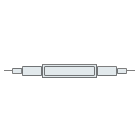
· Mechanical Optical Switches for ultra-low power consumption and long-term stable circuit provisioning
· MEMS and 3D Matrix Optical Switches enabling large port counts and true any-to-any connectivity for high-capacity OCS systems
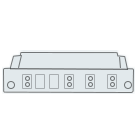
· High-density and multi-channel optical switch modules for rack-level and board-level integration
· By combining multiple optical switching technologies within a unified architecture, GLSUN achieves an optimal balance between performance, scalability, reliability, and cost efficiency.
3. Dynamic Optical Circuit Provisioning for Metaverse Traffic Patterns
Metaverse traffic is highly dynamic and event-driven. GLSUN’s OCS system supports fast creation, modification, and teardown of optical circuits, enabling real-time network adaptation based on application demand.
Typical use cases include:
· Rapid optical path reconfiguration during traffic surges caused by virtual concerts or large-scale online events
· Intelligent bandwidth redistribution during off-peak periods to improve overall resource utilization
· Centralized management and cross-domain orchestration of optical circuits
This dynamic optical circuit provisioning transforms the network from a static transport infrastructure into an agile, demand-aware resource pool.
4. Ultra-Low Latency and High Reliability by Design
By eliminating unnecessary electronic processing stages, GLSUN’s optical switching solution significantly reduces end-to-end latency at the physical layer. At the same time, the system is engineered for continuous, long-term operation in mission-critical environments:
· Wide operating temperature range and carrier-grade hardware design
· Long mechanical lifetime, supporting billions of switching cycles
· Redundant architectures and rapid fault recovery mechanisms
These features ensure predictable network performance and uninterrupted service delivery for metaverse applications operating 24/7.
5. Energy-Efficient Optical Interconnection for Sustainable Data Centers
As metaverse platforms scale globally, power consumption becomes a critical concern for data center operators. GLSUN’s optical switches consume minimal energy during signal transmission and require power only during state transitions.
Compared with traditional electronic switching architectures, OCS-based optical interconnection significantly reduces energy consumption per transmitted bit, helping operators build greener, more sustainable metaverse data centers while controlling operational costs.
6. Future-Ready and for Continuous Evolution
GLSUN’s optical switching and OCS solutions are built on a modular and architecture, supporting smooth evolution from 100G and 400G to higher-speed optical interfaces. The solution can be integrated with AI-driven scheduling platforms, edge computing infrastructures, and intelligent network control systems.
As metaverse applications continue to evolve, GLSUN remains committed to advancing optical switching innovation, enabling scalable, flexible, and resilient network foundations for the next generation of immersive digital experiences.


