















Fiber Optic Tech
A Comprehensive Guide to Intelligent Optical Protection Systems
Introduction: The Criticality of Optical Network Resilience
In the contemporary telecommunications landscape, optical transmission networks serve as the indispensable backbone of global connectivity. However, these infrastructures are perpetually exposed to a spectrum of physical and technical threats. From external factors such as construction-related excavation (cable digs), human interference, and natural disasters to internal vulnerabilities like power failures and hardware board malfunctions, the risk of service disruption is a constant reality.
As architects, we recognize that absolute prevention of these events is impossible; therefore, resilience becomes the primary objective. GLSUN Intelligent Optical Protection System is engineered to be the ultimate safeguard for network stability. By implementing a proactive, automated defense layer, this system ensures that transmission instability does not translate into catastrophic downtime, maintaining the integrity of the data stream even in the face of unforeseen link failures.
System Overview and Core Value Proposition
The GLSU/CHIP-TEK platform is a sophisticated integration of hardware and software designed to provide a "full-range guarantee" for optical infrastructures. We have architected this system to deliver four primary strategic benefits that directly impact operational health:
Comprehensive Network Management: Utilizing a full-range management interface, the system facilitates remote switching and configuration. This eliminates the logistical burden and safety risks of manual site visits for route scheduling.
Emergency Route Scheduling: In the event of a line interruption, the system executes an automated transition from the primary to the backup route, ensuring continuous business traffic and maintaining high service availability.
Real-time Fiber Monitoring: Continuous surveillance of both primary and secondary paths allows for immediate fault detection. This visibility is critical for preventing "double-fault" scenarios, where a hidden failure on a backup route could lead to a total network collapse if the primary fails.
Operational Efficiency: By providing a "Time-saving, Safe, and Fast" response to failures, the system significantly reduces Mean Time to Repair (MTTR). For service providers and enterprises, this efficiency is the key to upholding rigorous Service Level Agreements (SLAs) and minimizing the economic impact of outages.
Hardware Architecture and Scalability
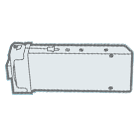
The system is built on a modular chassis-based architecture, designed to scale with the density requirements of modern data centers and hubs. Central to this ecosystem is the Optical communication integrated network management system software platform, which provides the intelligence required to orchestrate complex protection logic across the hardware.
|
Feature |
8+2 Slot Chassis |
16+2 Slot Chassis |
|
Business Slots |
8 Dedicated Slots |
16 Dedicated Slots |
|
Management Redundancy |
1+1 Management Card Protection (+2 slots) |
1+1 Management Card Protection (+2 slots) |
|
Module Scalability |
Supports dozens of card types (OLP, EDFA, etc.) |
Supports dozens of card types (OLP, EDFA, etc.) |
Power and Interface Specifications
Power Reliability: The chassis supports dual hot-swappable power supplies, compatible with both -48V and 220V environments to ensure zero-downtime maintenance.
Management Versatility: Engineers can interface with the system via Serial port, Web, SNMP, Telnet, and SSH, allowing for seamless integration into existing Network Management Systems (NMS).
Deep Dive into Optical Protection Mechanisms (OLP)
The core of the system’s resilience lies in its versatile Optical Line Protection (OLP) modules, each optimized for specific network topologies.
OLP 1:1 (Selective Transmit / Selective Receive)
In a OLP 1:1 configuration, the system designates an active primary route and a standby backup route. Uniquely, the backup route is not necessarily idle; it can be utilized to transmit secondary signals or remain dark until needed. When the receiver detects signal degradation on the primary line, the system synchronizes a switch to the backup route at both ends.
Strategic Feature: Includes loss of light locking. This is a critical architectural safeguard that prevents "route flapping" or "hunting," where the system repeatedly attempts to switch between two failed routes during a total fiber break, which could further destabilize connected hardware.
Application: Optimized for trunk transmission networks and local networks where low insertion loss is a priority.
OLP 1+1 (Dual Transmit / Selective Receive)
This mode utilizes a 50:50 coupler at the transmission end to send signals concurrently across both primary and backup paths. The receiving end monitors both and selects the superior signal.
Strategic Feature: While it incurs higher insertion loss due to the signal split, it offers the fastest possible recovery time.
Application: Standard for high-priority trunk lines and mission-critical dedicated line customers.
OLP-BIDI (Single-Fiber Bidirectional)
The OLP-BIDI solution is engineered for scenarios where fiber core resources are scarce. It employs Dual transmit / Selective receive and Concurrent transmit / selective receive logic to provide bidirectional protection over a single fiber strand.
Application: Essential for high-importance lines in urban environments with limited duct space.
OLP-PON
Explicitly designed for Passive Optical Networks, this module provides automatic switching protection to ensure the stability of PON architectures.
Application: Critical for Fiber-to-the-Home/Building (FTTH/B) deployments.
Advanced Protection: Bypass and Cross-Connect Solutions
To address site-level and device-level failures, the system incorporates specialized protection cards:
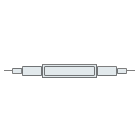
OBP (Optical Bypass Protection): Designed to protect serial or daisy-chained network elements. If a protected device loses power or suffers a board failure, the OBP automatically bypasses the faulty node, maintaining the integrity of the rest of the communication chain and preventing a single site failure from cascading into a regional outage.
OCP (Optical Cross Protection): This module facilitates 1:N device redundancy. In this configuration, a single backup device can provide protection for multiple (N) active devices. If any primary hardware fails, the OCP cross-connects the traffic to the redundant unit.
Signal Enhancement: EDFA and DCM Modules
In long-haul resilient architectures, protection switching is only effective if the signal reaches the switch with sufficient integrity. The GLSU/CHIP-TEK system integrates signal conditioning as a core component of the protection link.
EDFA (Erbium-Doped Fiber Amplifier): These modules provide high gain with low noise and excellent gain flatness. They support APC (Automatic Power Control), AGC (Automatic Gain Control), and ACC (Automatic Current Control) modes. They are utilized for power amplification in long-haul trunking and pre-amplification at the receiver or before signal splitting.
DCM (Dispersion Compensation Module): Essential for long-distance transmission, the DCM works in tandem with OLP and EDFA to correct chromatic dispersion, ensuring that data integrity is maintained after a protection switch occurs over a long-distance backup path.
Conclusion: The Strategic Advantage of Intelligent Protection
GLSUN Intelligent Optical Protection System represents a paradigm shift from reactive maintenance to proactive infrastructure resilience. By synthesizing automated OLP switching, OBP site-level bypass, and EDFA/DCM signal conditioning, the system provides a comprehensive "full-range guarantee" for the optical backbone.
For organizations, the strategic advantage is clear: a significant reduction in MTTR, the ability to meet the most demanding SLAs, and a dramatic decrease in the operational costs associated with emergency manual repairs. In an era where connectivity is the lifeblood of the economy, intelligent protection is not an option—it is a necessity.
Technical Specifications Summary Table
|
Component |
Primary Use Case |
Key Technical Logic |
|
OLP 1:1 |
Trunk and local networks |
Selective transmit (supports secondary signals); loss of light locking. |
|
OLP 1+1 |
High-priority trunk lines |
Dual transmit via 50:50 coupler; selective receive. |
|
OLP BIDI |
Fiber-scarce environments |
Single-fiber bidirectional; Dual/Concurrent transmit. |
|
OLP-PON |
FTTH/B stability |
Automatic switching for PON architectures. |
|
OBP |
Serial/Daisy-chained sites |
Automatic bypass of faulty devices or sites. |
|
OCP |
Hardware device failure |
1:N device redundancy and cross-connect. |
|
EDFA |
Long-haul link integrity |
Power amplification; APC/AGC/ACC modes. |
|
DCM |
Long-distance transmission |
Chromatic dispersion compensation. |


